Inspecting a used car is compromised by context. Online, 2D photos can't show real condition. On the lot, you're inspecting under pressure, seller watching, aware of time, unable to check the way you would at home: slowly, from every angle, without anyone waiting on you.
I built CarViewer to remove that constraint. An interactive 3D model buyers can rotate, zoom, and compare on their own time, so that by the time they reach the dealer, they already know exactly what they're evaluating.
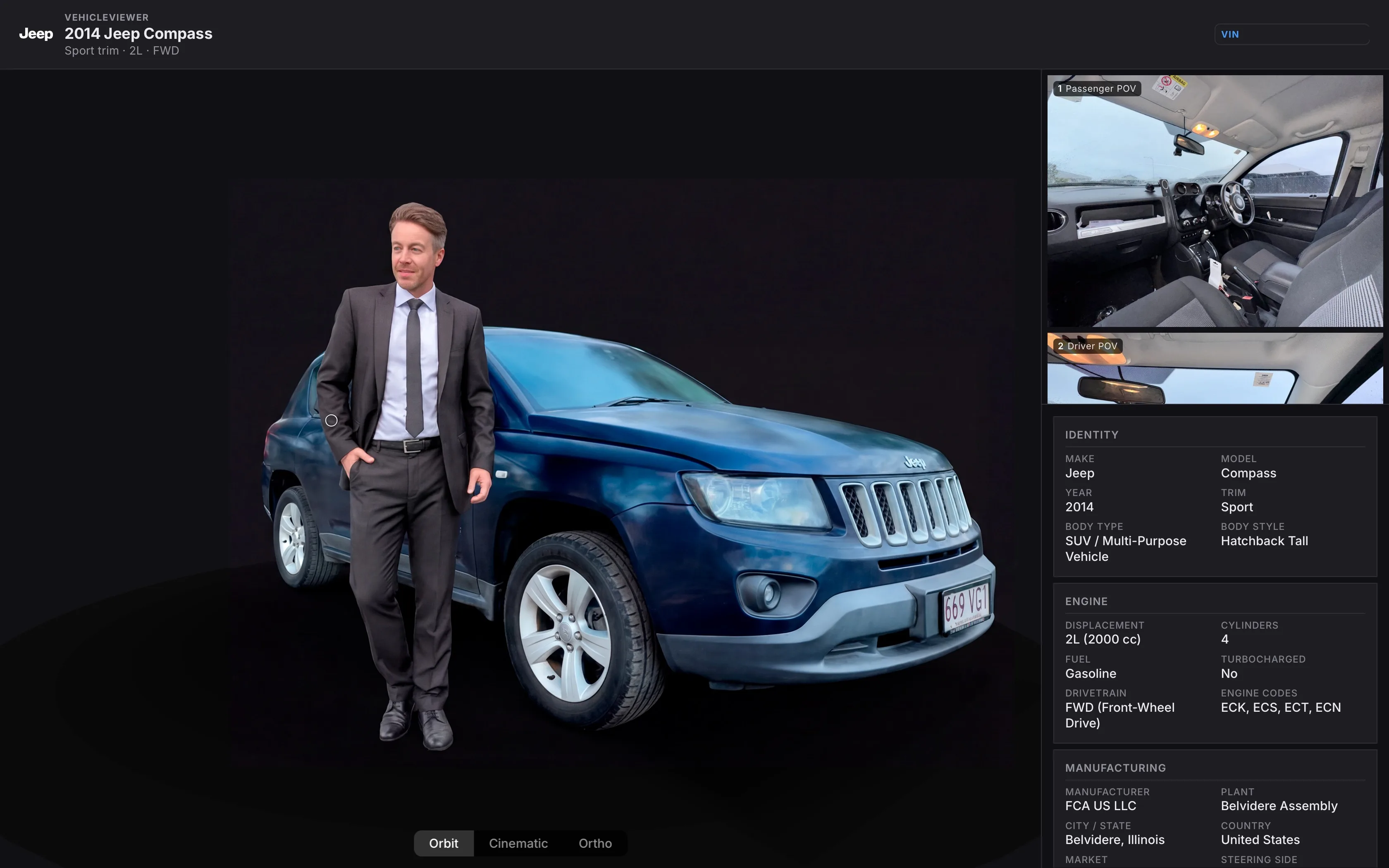
The layout mirrors how inspection actually works
A split-pane view puts the 3D model on the left and structured vehicle data on the right, because that's how a professional inspector actually works: constantly cross-referencing visual condition against specs, not looking at either in isolation.
A Points of Interest system lets sellers tag damage directly on the 3D body, each pin carrying a photo, a description, and a repair estimate. That turns hidden issues into transparent documentation, which changes the trust dynamic entirely.

Three camera modes map to how people actually inspect a vehicle: Orbit for free rotation at your own pace, Cinematic for guided fly-throughs that highlight specific features, and Orthographic for top-down and profile views that reveal alignment issues a normal angle would hide.
The hard part wasn't the 3D, it was the capture
Photorealistic 3D doesn't come from pointing an iPhone at a car. I built a capture protocol: a polarizing filter to eliminate reflections, a strict shooting pattern for consistent distance, height, and frame overlap, then manual review of every model for artifacts, lighting adjustments, and detail sharpening.
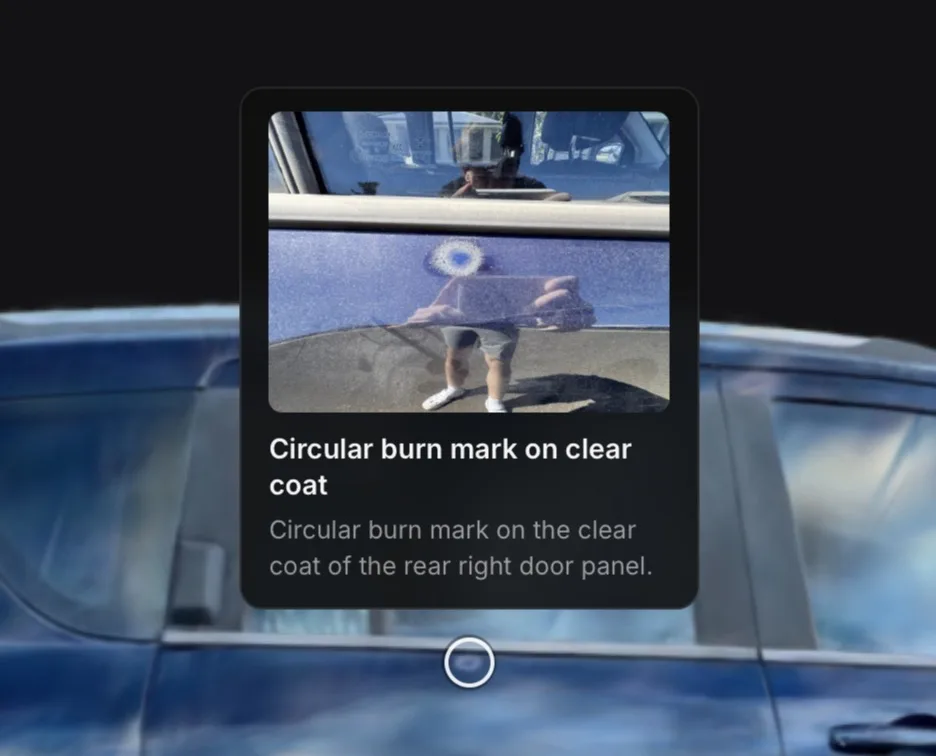
That human-in-the-loop step is what separates a result buyers actually trust from one that's merely good enough. The 3D technology is the tool. The craft is in the capture process nobody sees.
What shaped every decision
Nothing here came from a framework. The split-pane layout exists because that's how you physically inspect something. The POI system exists because damage is only frightening when it's hidden. The three camera modes exist because people genuinely rotate, zoom, and examine from different angles when the stakes are a purchase this size. Every choice traces back to imagining someone actually evaluating a real car, not to a UX pattern borrowed from elsewhere.